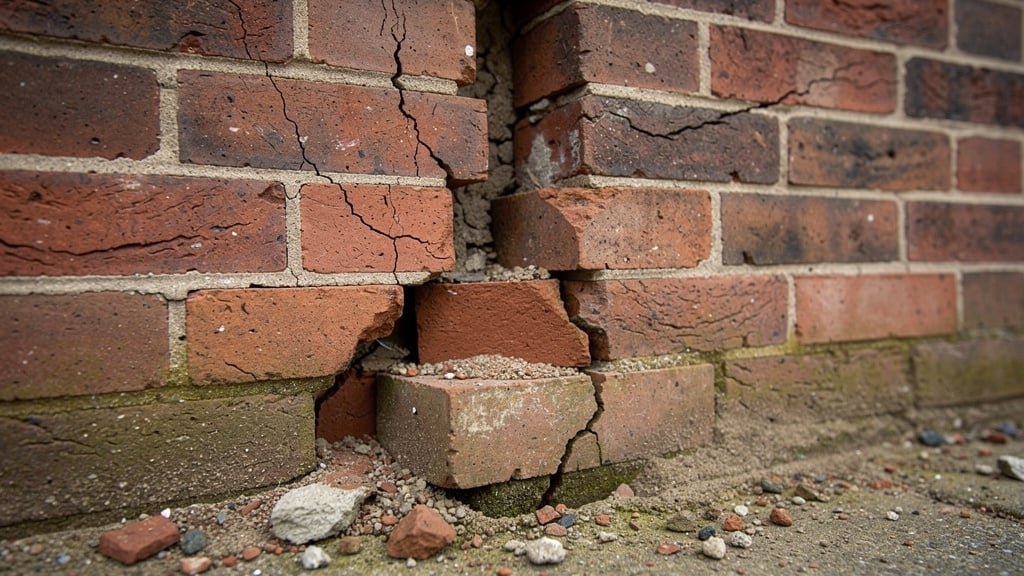
Few words cause more anxiety for property buyers than "subsidence." The very mention of it can send buyers running for the exit — and yet, at Bath Surveyors UK, we frequently encounter properties where visible cracking has been incorrectly attributed to subsidence when the cause is something far more benign, and equally, properties where subtle signs of genuine ground movement have been overlooked. Understanding the difference is one of the most valuable things a building surveyor can offer.
Bath presents a particularly interesting set of geological and built environment challenges. The city's hills, its historic mine workings, its proximity to the River Avon's floodplain, and its centuries-old building stock all combine to create a range of ground movement risks that require specialist understanding.
What Is Subsidence?
Subsidence is the downward movement of the ground beneath a building's foundations, which causes the building itself to sink or settle unevenly. It is distinct from settlement, which is the natural and expected compression of the ground under the weight of a new building (typically occurring in the first few years after construction and then stabilising). Subsidence, by contrast, is an ongoing or episodic process that occurs in a building that has previously been stable.
True structural subsidence can cause cracking, distortion of door and window frames, sloping floors, and — in severe cases — serious structural damage requiring major remediation works. It can also have significant implications for buildings insurance, as insurers are required to be notified of subsidence claims, and some properties with a history of subsidence may be harder or more expensive to insure.
Causes of Ground Movement in Bath
Bath and its surroundings have several specific causes of ground movement that our surveyors are well acquainted with:
1. Clay Shrinkage and Heave
Much of Bath and the surrounding area is underlain by clay-bearing geological formations. Clay soils shrink when they dry out (typically during hot, dry summers) and expand when they reabsorb water (typically in wetter periods). Shallow foundations — common in period properties built before modern foundation standards — are most vulnerable to this cyclic movement. Trees and large shrubs in close proximity to a building can extract significant amounts of moisture from the clay, accelerating drying and shrinkage. Conversely, if a large mature tree is removed, the clay may rehydrate and expand (heave), which can be equally damaging.
2. Historic Mine Workings
Bath has an extensive history of underground quarrying for the famous Bath stone. Mine shafts and stone mine workings underlie significant parts of the city, particularly in areas such as Combe Down, Bathampton, Bathford and Limpley Stoke. Mine voids can collapse over time — a process known as crown hole formation — leading to sudden and severe subsidence. English Heritage and Bath and North East Somerset Council maintain records of known mine workings, and a specialist mine risk search is advisable for properties in at-risk areas.
3. Made Ground and Filled Land
Bath has been continuously occupied for over 2,000 years, and in many parts of the city, buildings sit on "made ground" — historical deposits of rubble, demolition material, ash and organic waste — rather than on the natural ground. Made ground can be highly variable in composition and can consolidate and settle over time, causing differential movement in the buildings above. Properties on sloping sites are also potentially subject to slow downhill creep of made ground.
4. Leaking Drains and Water Mains
One of the most common causes of foundation movement in older properties is the gradual erosion of the soil beneath foundations by leaking underground water mains or drainage pipes. This is sometimes called "washout." The constant flow of water from a leaking pipe can gradually wash fine soil particles away from beneath the foundations, leading to progressive settlement. This is why a CCTV drain survey is so important when purchasing a period property in Bath.
5. Shallow Foundations
Georgian and early Victorian properties in Bath were typically built on relatively shallow foundations — often just a few courses of stone below ground level. By modern standards, these foundations provide only minimal protection against ground movement. This does not mean the buildings are inherently unsafe — many have stood perfectly well for 200 years — but it does mean they are more vulnerable to changes in ground conditions than modern buildings with deep reinforced concrete strip or pad foundations.
6. Slope Instability
Bath is built on steeply sloping hillsides, and some properties — particularly those on the slopes of Lansdown, Bathampton Down, Combe Down and the surrounding hills — may be subject to slow slope creep or, in rare cases, more significant slope instability. Signs of slope movement can include progressive cracking on the downslope side of a property, sloping floors and distorted door frames.
How to Recognise Signs of Subsidence
Not all cracking in a building is subsidence — in fact, the majority of cracks we encounter in period properties are caused by thermal movement, moisture movement, or shrinkage of mortar and plaster, none of which is structurally significant. However, there are certain characteristics of cracking that require closer investigation:
- Diagonal cracking running through masonry at 45°, particularly when it widens towards the top (tapering downwards) — this is a classic pattern associated with differential settlement.
- Cracking that is wider than 5mm — cracks of this width warrant further investigation regardless of their orientation.
- Cracking accompanied by distortion of door or window frames — sticking doors or windows, particularly if this is a recent development, can indicate structural movement.
- Cracking that appears both internally and externally in the same location — this suggests the crack penetrates the full depth of the wall.
- Sloping floors — particularly on ground floors — can indicate foundation movement, though in very old properties some floor slope may be entirely historic and stable.
- Gaps between the building and an attached structure such as a porch, extension or bay window — differential movement between the main structure and an attachment is relatively common and often indicates foundation movement in the lighter structure.
What Happens After a Surveyor Identifies Suspected Subsidence?
If our surveyors identify defects that are potentially consistent with active subsidence, we will set this out clearly in our survey report along with our assessment of the likely cause and our recommendations for further investigation. Typically, the next steps might include:
- Specialist structural engineer's report — a structural engineer can assess cracks in detail, carry out monitoring of crack widths over time, and advise on remediation options.
- Ground investigation — trial pits or boreholes to establish the ground conditions beneath the foundations.
- CCTV drain survey — to establish whether leaking drainage may be a contributing factor.
- Mine risk assessment — specialist research into historic mine workings for properties in at-risk areas.
- Tree root investigation — where trees are present, an arboricultural report may help establish whether root-related clay shrinkage is a factor.
Remediation Options
If subsidence is confirmed and is found to be active (i.e., ongoing rather than historic and stable), remediation works may be required. The appropriate method depends on the cause and extent of the movement:
- Underpinning — the traditional method of deepening or strengthening existing shallow foundations. Mass concrete underpinning (the "hit and miss" method) is the most common technique for period properties.
- Mini-piled underpinning — installing small-diameter piles beneath the existing foundations to transfer the building's load to more stable ground at depth. This is less disruptive than traditional underpinning.
- Resin injection — a relatively modern technique in which expanding resin is injected beneath foundations to fill voids and compact loose ground. Suitable only for certain ground conditions.
- Tree removal and root barrier installation — where clay shrinkage related to trees is the cause, removing the offending tree (with appropriate consents, particularly in conservation areas) and allowing the ground to rehydrate may resolve the problem over time.
- Drain repair — where washout caused by leaking drainage is the cause, repairing the drain may be sufficient to stabilise the ground.
Subsidence and Buildings Insurance
Properties that have previously experienced subsidence, or that have been underpinned, can sometimes be more difficult or expensive to insure. If you are purchasing a property with a known history of subsidence, we strongly recommend obtaining specialist buildings insurance quotes before you exchange contracts, to ensure adequate cover is available at an acceptable premium.
Frequently Asked Questions
I've spotted cracks in a property I want to buy. Does this mean it has subsidence?
Not necessarily. The vast majority of cracks in period properties are caused by thermal and moisture movement, which is normal and not structurally significant. Our surveyors are trained to assess cracks carefully and distinguish between those that warrant concern and those that do not. A professional survey will give you a clear picture of what the cracking means and what, if anything, needs to be done.
Should I walk away from a property with a history of subsidence?
Not automatically. Many properties with a history of subsidence have been successfully remediated and are entirely stable. What matters is understanding the cause of the original movement, whether it has been resolved, and whether the property is currently stable. Our surveyors can help you assess the risk and make an informed decision.
Can I get subsidence cover on my buildings insurance?
Most standard buildings insurance policies include subsidence cover as standard, subject to a policy excess (typically £1,000 for subsidence claims). Properties with a known history of subsidence may require specialist insurance. Always check your policy carefully.
Concerned about cracking or movement in a Bath property?
Bath Surveyors UK provides specialist structural defect assessments and Level 3 Building Surveys across Bath, BANES, Bristol and Somerset. Don't take a risk — get the facts before you buy.
Get a Free Quote