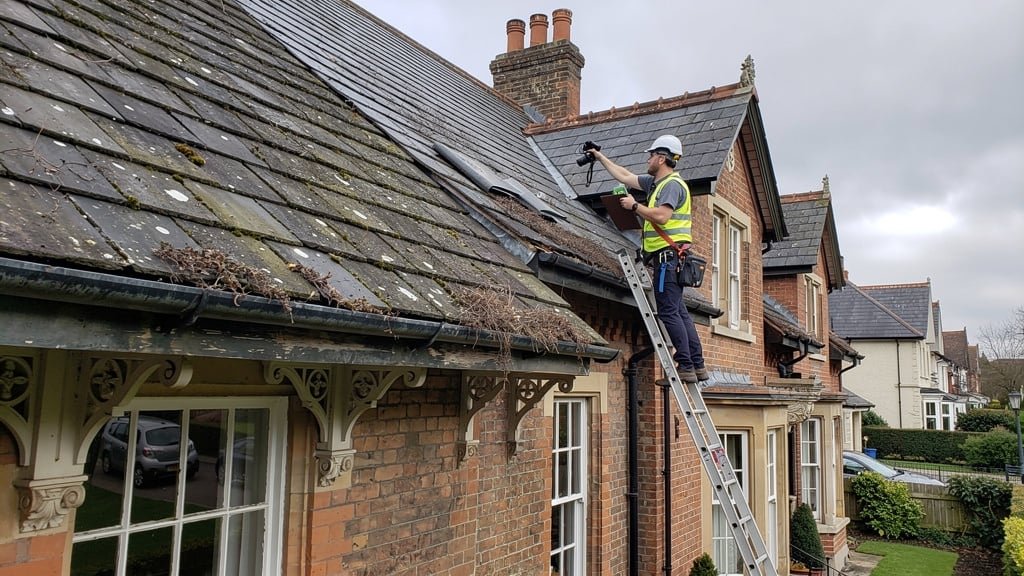
Bath Surveyors UK considers the roof to be one of the most critical elements of any property survey. A well-maintained roof protects everything below it. A failing roof can lead to cascading problems — damp, structural timber decay, insulation failure — that are far more expensive to fix than the roof itself. Here's what our building surveyors look for during a roof inspection in Bath, and what the common findings mean for buyers.
How Our Surveyors Inspect Roofs
During a Level 3 building survey, our surveyors carry out a thorough roof inspection including:
- External inspection of the roof covering, ridge, verges, eaves, gutters and downpipes — using binoculars where a ladder is not practicable
- Inspection of chimney stacks, flashings, valleys and parapets
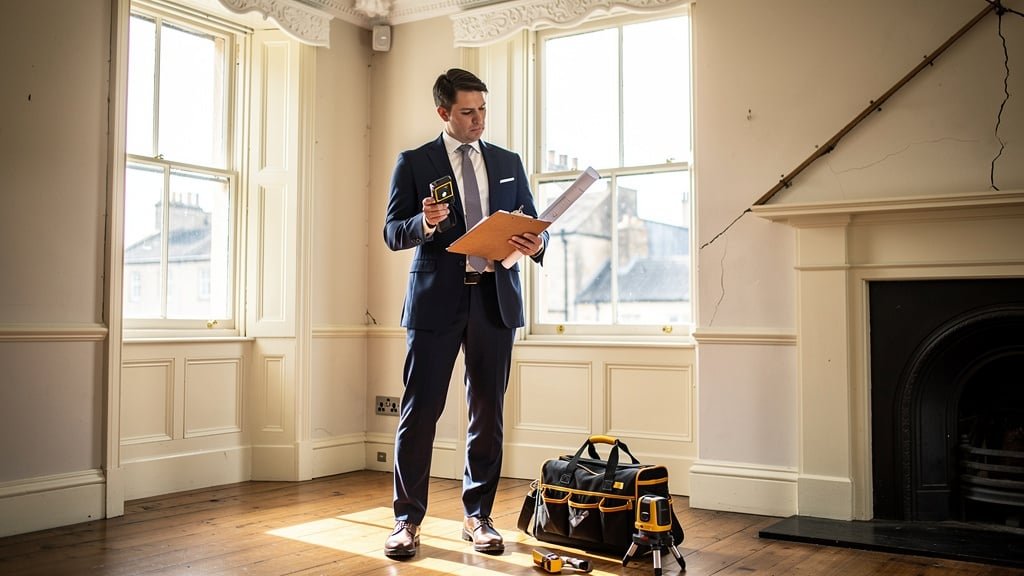
- Roof void inspection via loft hatch (where safely accessible) to inspect the roof structure, insulation, and any internal evidence of leaks
- Assessment of gutters and downpipes for condition and functionality
Common Roof Defects Found in Bath Properties
Slipped or Broken Roof Tiles/Slates
Individual slipped or broken tiles or slates are very common in Bath's older properties — and fortunately, relatively inexpensive to repair. The problem is that they allow water ingress that can cause far more expensive secondary damage if left unattended. We always flag even minor tile slippage in our survey reports.
Failed Lead Flashings
Lead flashings seal the junction between the roof covering and vertical elements like chimney stacks, dormers, and parapets. Lead has a lifespan of around 50–80 years — so in many of Bath's older properties, original lead flashings are due for or past replacement. Failed flashings are one of the most common causes of penetrating damp we find during building surveys.
Blocked or Damaged Gutters and Downpipes
Overflowing gutters are a major cause of damp and accelerated decay to the building fabric below. Cast iron guttering (common in Victorian and Edwardian Bath properties) can crack, separate at joints, or sag, causing water to overflow against the wall face rather than draining away. We check every accessible gutter and downpipe during our surveys.
Roof Structural Issues
In older Bath properties, we look carefully for evidence of structural deterioration in the roof timbers — sagging rafters, rot in the purlins or ridge board, and spreading or distortion of the roof structure. These are more serious findings that typically require a structural specialist to provide repair specifications.
Poor Previous Repairs
One of the most common issues we find is evidence of previous poorly executed repairs — typically concrete-based filler applied over cracks in ridge tiles, or cement pointed over original lead flashings. These bodge jobs often fail quickly and can make the underlying problem worse.
What Does Roof Repair Cost in Bath?
- Individual tile/slate replacement: £100–£500
- Repointing ridge tiles: £1,000–£3,000
- Lead flashing replacement (chimney stack): £500–£2,000
- Gutter and downpipe replacement (cast iron to UPVC): £1,500–£5,000
- Partial re-roofing: £5,000–£15,000
- Full re-roof (mid-terrace): £8,000–£25,000
For listed properties, all roof repairs must use matching traditional materials — which typically costs significantly more than UPVC or concrete alternatives.
Concerned About the Roof on a Bath Property?
Our thorough Level 3 building survey includes a comprehensive roof inspection. Get a free quote →

Daniel has 12 years of experience with a strong background in structural defect analysis and building condition assessment.